MUSIC · LIVE ENTERTAINMENT · TOURING · MUSIC BUSINESS
When the Stage Becomes Home: Why Harry Styles, Celine Dion, and Other Global Music Stars Are Choosing Long-Term Residencies (October 24, 2026)
Article Updated: October 24, 2026
From Harry Styles filling Madison Square Garden across 30 nights to Céline Dion’s long-awaited return in Paris, concert residencies are becoming more than a convenient run of shows. They are carefully built experiences that bring music, stage design, fan culture, tourism and the economics of live performance together in one place.
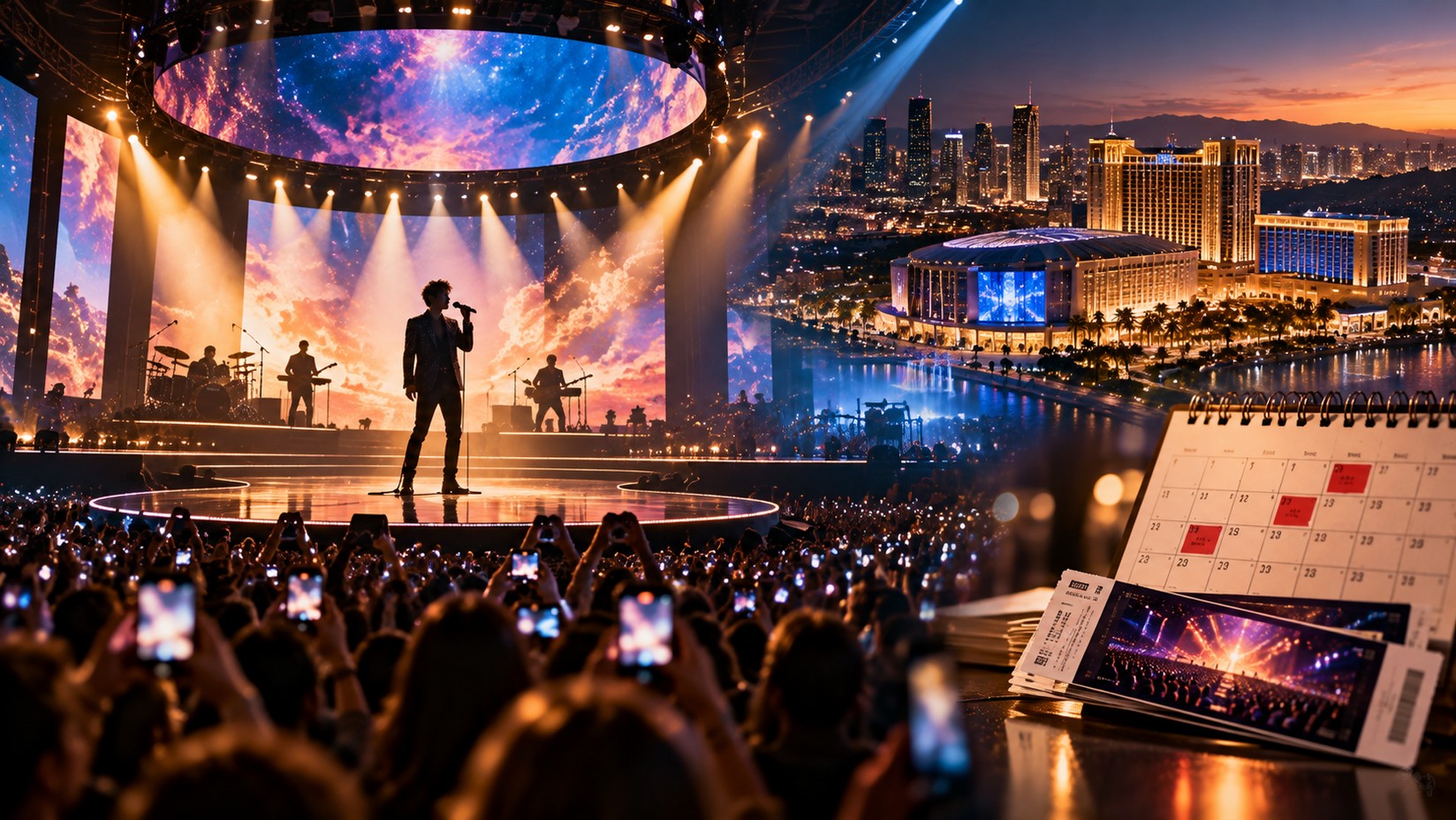
A conventional tour moves performers, crews and equipment from city to city. A residency concentrates multiple performances at one venue or within one city, allowing the production to stay in place while fans travel to the show.
The format is not new: Las Vegas has hosted major artists for decades, and Céline Dion helped make the modern residency a major live-music product. What feels different in 2026 is the range—from contemporary pop and a comeback in Paris to Puerto Rico’s urban-music scene and technology-led venues such as Sphere.
A recent Associated Press report published on October 23 describes how residencies have moved beyond their old image as a final career stop. It points to the benefits for performers and promoters, the destination-event atmosphere for fans, and the financial pressure that travel and ticket prices can put on audiences. This article builds on those reported facts with a practical look at how a residency is made, what artists gain from it, and what fans and host cities should consider. Read the Associated Press report
Key takeaways
- A residency means a series of concerts concentrated in one venue or city; it can be a limited engagement rather than a permanent arrangement.
- Harry Styles’ 2026 “Together, Together” plan includes 30 Madison Square Garden shows within a seven-city, 50-performance global run.
- Céline Dion’s Paris engagement marked her return to a full live show after a six-year absence, with an initial 16-date run in September–October and further performances scheduled for May 2027.
- Residencies let production teams refine a set, reuse large staging systems and reduce some travel logistics, while giving artists more predictable routines.
- Fans may get a highly tailored show and a shared destination experience—but ticket costs, hotels, transport and limited geographic access can make attendance expensive.
- Local economic benefits are real possibilities, not automatic guarantees; estimates vary by method and depend on how much visitor spending reaches local businesses and workers.
1. What a residency really is—and why the idea has changed
A residency is a sequence of performances concentrated at one venue or destination. It may last a few weeks or return over several seasons; it does not necessarily mean a permanent show. An arena artist might play dozens of nights before moving on, while a Las Vegas production can recur over years.
The advantage is concentration. Keeping trucks, scenery, musicians and crew in one place can reduce repeated moves and allow lighting, video and stage systems to be refined across performances. A large residency still needs substantial upfront investment and a venue equipped for the production.
The format has become a destination product. Fans may plan flights, hotels, meetups and merchandise shopping around the show, turning a concert into a shared travel experience.
Yet residency and tour are not opposites. Harry Styles’ 2026 itinerary shows how the two can be combined: a residency-like run in each selected city, linked together in a broader international schedule. That structure gives the artist repeated nights in major markets without requiring the same full production to move every day. See Live Nation’s official tour announcement
2. Harry Styles: thirty nights in New York, but a global tour overall
Harry Styles’ “Together, Together” run is one of the clearest examples of the residency model being used by a current pop star. Live Nation announced 50 performances across seven cities for 2026: Amsterdam, London, São Paulo, Mexico City, New York, Melbourne and Sydney. Madison Square Garden is scheduled to host 30 of those shows between August 26 and October 31, making New York his only U.S. stop in 2026 and the city with the largest concentration of dates.
The distinction matters: this is not a single-venue residency replacing every part of a world tour. It is a tour deliberately built around a small number of cities, with an unusually long run at the Garden. The calendar itself creates scarcity: fans who cannot travel to New York do not have another U.S. city to choose during the 2026 run, while local fans have multiple chances to attend.
The Garden is also using themed concessions, photo activations and merchandise access to build an event around the show. Live Nation lists rotating guests on selected dates, charity partnerships and a New York HeadCount activation for eligible fans who want to register to vote.
Those details show how a residency can be designed as an ecosystem: the headline performance draws the audience, but pre-show activity, local partners, merchandise, charity initiatives and fan gatherings extend the experience. They also create work that is specific to the venue and the host city, rather than merely reproducing a travelling show. Read MSG’s official residency details
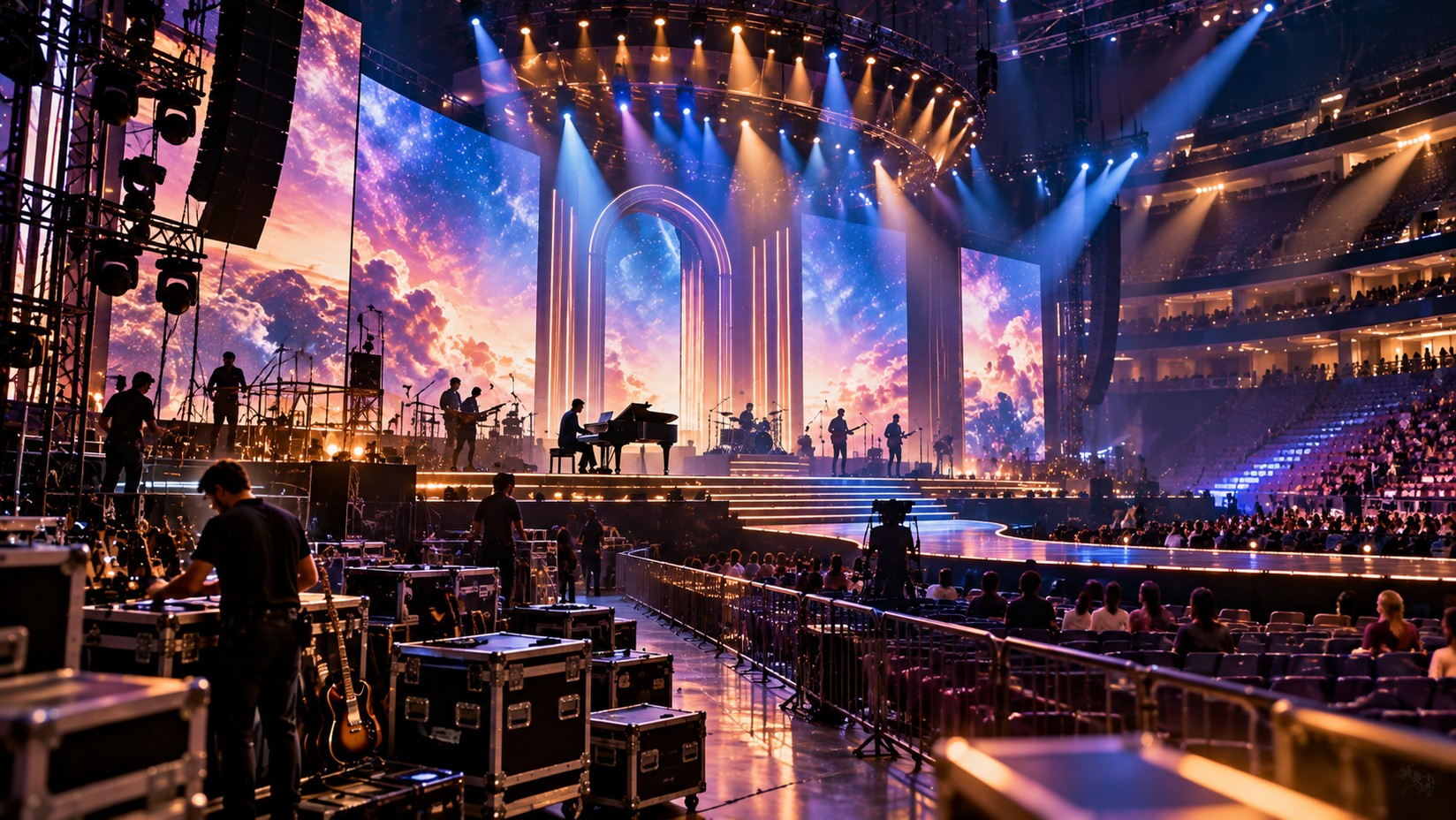
3. Céline Dion: a residency as a return to live performance
Céline Dion’s Paris engagement carries a different kind of story. In March 2026, Dion announced “Celine Dion Paris 2026,” a limited series at Paris La Défense Arena. The first concert took place on September 12, her first full concert in more than six years after health problems and her 2022 public announcement that she had stiff-person syndrome, a rare neurological condition. The initial announcement listed ten dates, and additional dates expanded the autumn run to 16 shows through October 17; further performances are scheduled for May 2027.
The fixed venue can make scheduling rehearsals, rest and production more predictable than constant travel. That does not make a residency effortless or medically simple, and private health details should not be inferred beyond what Dion has publicly disclosed. It does show why a carefully scheduled run can suit some performers.
Dion’s official announcement named Willo Perron as creative director. The opening-night account described large visual elements and transforming stage structures around songs from her French- and English-language catalogue. Keeping the venue fixed gives designers time to shape a coherent arc from opening to encore.
The Paris story also illustrates why a residency can feel intimate even in a huge arena. Fans are not only watching a famous singer perform familiar songs; they are witnessing a return after a long absence. The meaning of the show is shaped by timing, career history, the artist’s relationship with the audience and the audience’s own memories. The same production choice—a limited run instead of a 100-city tour—can therefore serve both practical planning and storytelling. Read the official opening-night announcement Read Reuters’ report from Paris
4. Bad Bunny, Adele, Usher and the broader residency wave
Bad Bunny’s 2025 San Juan residency linked live music to Puerto Rico’s cultural identity and visitor economy. The run at the José Miguel Agrelot Coliseum included 30 announced shows and an additional date; the first concerts were reserved for island residents, giving local fans priority before the wider international draw.
Discover Puerto Rico, the island’s destination-marketing organisation, later presented an estimate that the residency’s economic impact ranged from $200 million to $700 million depending on the methodology used. The wide range should not be treated as one precise, settled measure. It is a reminder that impact studies can count different things: direct visitor spending, hotel activity, supply-chain effects, wider economic activity or longer-term brand exposure. Separate hotel analysis also found stronger hotel performance on public-facing concert dates than on the residents-only shows, illustrating how visitor composition affects local effects.
Adele’s ten “Weekends with Adele” dates in Munich in 2024 were a purpose-built destination engagement. Usher, Katy Perry and Lady Gaga have brought newer audiences to Las Vegas residencies, while U2’s Sphere run showed how a show can be designed around a venue’s wraparound display and immersive audio. In such cases, the venue becomes part of the creative language.
These examples are not interchangeable. Bad Bunny’s run was closely tied to Puerto Rico and its audience; Dion’s Paris shows carried the significance of a return; Styles’ New York dates form part of a multi-city tour; and a Sphere production is shaped by the building’s technical design. What unites them is the choice to repeat performances in a particular place and make that repetition part of the value. Read Discover Puerto Rico’s economic-impact summary Explore current shows at Sphere
5. How a residency show is made: the work behind the lights
A residency may look effortless, but consistency is engineered. The process begins with a concept for the evening—its story, song order, stage language and finale—then musical directors, choreographers, lighting and video designers, costume teams, sound engineers and production managers turn it into a repeatable event.
From songs to an arc
A set list is an arc, not just a list of hits. It may move from a high-energy opening to an acoustic middle and a recognisable finale. For a catalogue crossing languages or decades, as Dion’s does, the order can tell a compressed career story; repeated performances let the team refine transitions and pacing.
Why the venue changes the production
With scenery and gear installed, the team can use large screens, moving platforms and synchronised effects that would be costly to rebuild nightly. Sphere and Madison Square Garden offer different layouts and technical possibilities; the best production is the one that fits the room, performer and music, not simply the most expensive.
Keeping repeated nights fresh
Repetition creates its own demands: performers must sustain their energy and concentration, while crews maintain equipment and safety. Guest appearances or small set-list changes can distinguish selected nights, but the fixed venue does not remove rehearsals, maintenance or fatigue management.
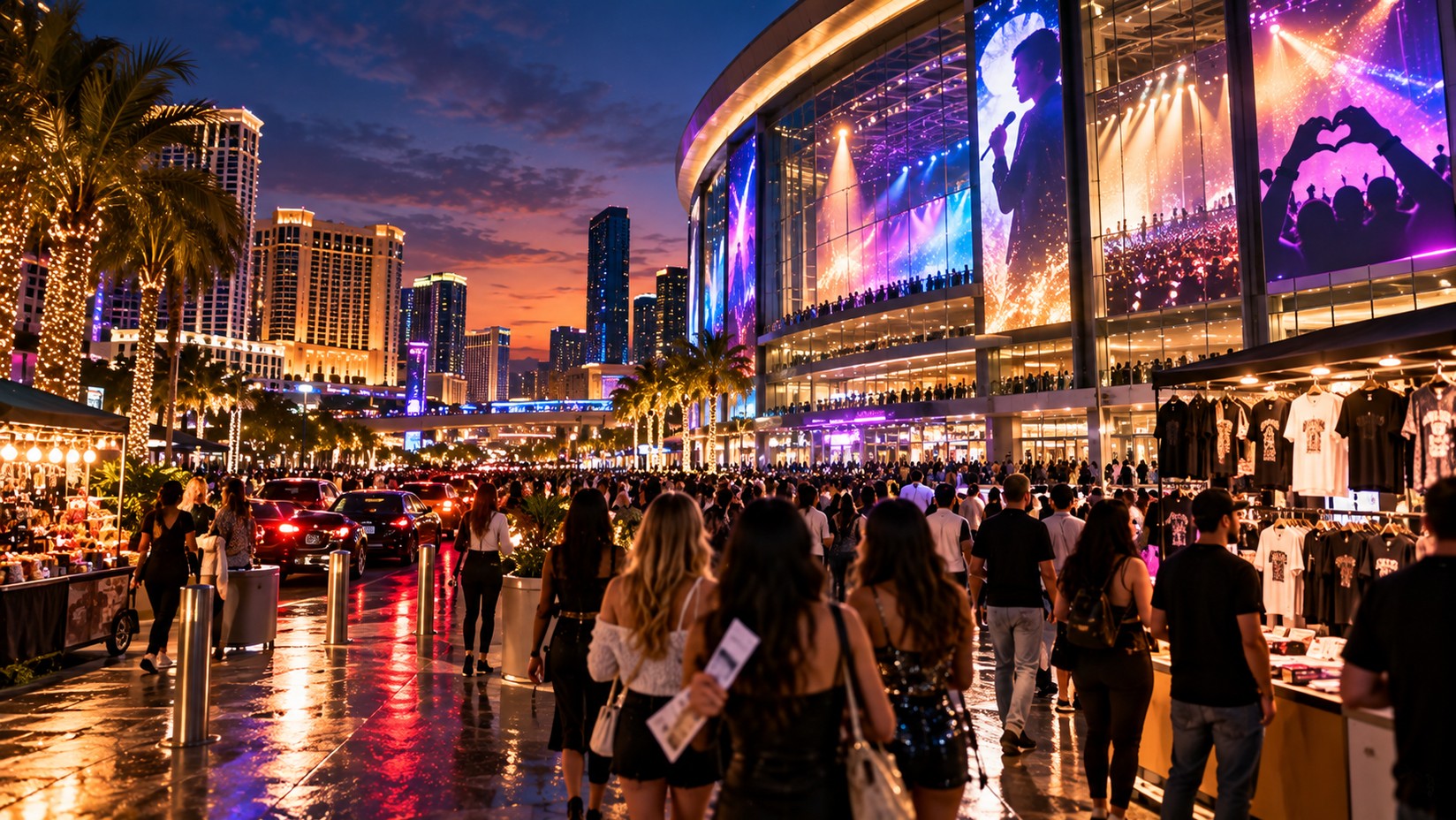
Behind the scenes are venue contracts, security, accessible seating, insurance, ticketing, local labour, catering, rehearsal rooms and contingency plans. A long run concentrates logistics in one place but also makes the event dependent on the venue, its staff and its schedule.
6. The money: what the artist, venue, city and fan each contribute
A fixed production can earn revenue across many nights. Alongside tickets, a show may generate merchandise, premium packages, concessions, sponsorship and hospitality income. Revenue splits depend on private contracts, so attendance and gross ticket figures should not be mistaken for an artist’s personal earnings.
The scale can be substantial: AP, citing Billboard, reported that Dion’s Las Vegas residencies grossed $681.3 million across 1,141 performances over 16 years. Gross revenue is not profit; production costs, venue terms, salaries and taxes all matter. The figure nonetheless shows how central a residency can become to an artist’s career and venue programming.
Host cities may gain from hotel stays, restaurants, transport, retail and event labour. But estimates vary depending on whether they count direct visitor spending or wider economic activity. Congestion and higher prices can affect residents differently from businesses that gain customers; activity does not guarantee evenly shared benefits.
| Who is involved? | Potential gains | Costs or risks |
|---|---|---|
| Artist and creative team | Predictable schedule, a tailored show, repeat revenue and less constant travel. | Upfront production expense, physical fatigue, fixed dates and dependence on one venue. |
| Venue and promoter | High utilisation, concessions, premium experiences and more national or international attention. | Production investment, calendar risk, cancellation exposure and crowd-management demands. |
| Local businesses and workers | Visitor spending for hotels, transport, food, retail, event labour and services. | Benefits may be uneven, seasonal, or concentrated among large suppliers and districts. |
| Fans | A polished, destination-specific show and more chances to attend in the host market. | Ticket fees, flights, hotels, time off work, limited geography and resale-market pressure. |
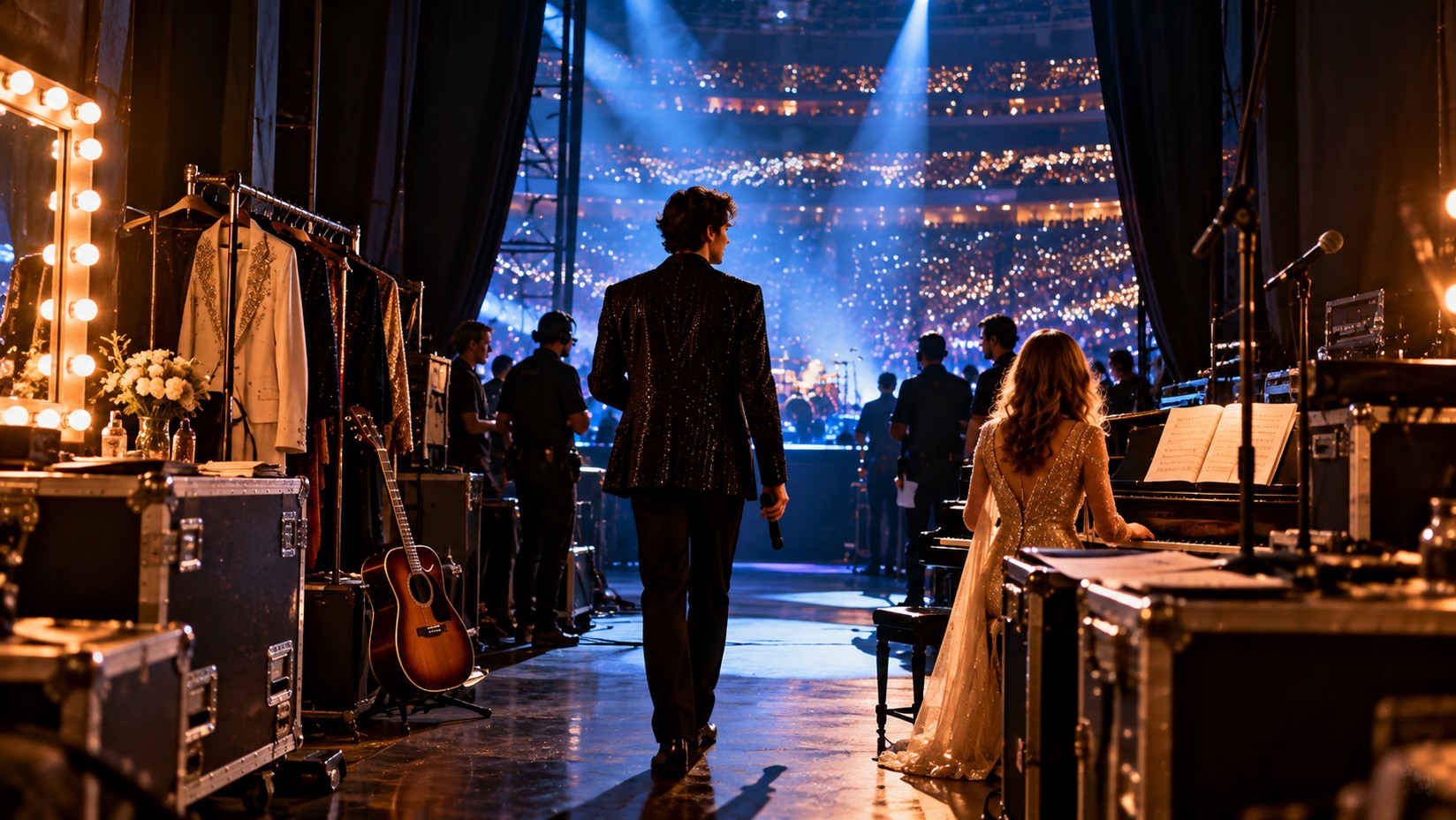
For Puerto Rico, Discover Puerto Rico’s published estimate for Bad Bunny’s residency ranged from $200 million to $700 million depending on the methodology. The breadth of that range is as important as the headline number: the public should ask what was counted, how spending was attributed to the concerts, and whether local residents and small businesses shared in the benefits. Read the tourism organisation’s explanation Read the hotel-performance analysis
7. The trade-offs: convenience for the performer, travel for the fan
Residencies can reduce some travel for artists and crews, but they concentrate the event geographically. A New York fan has many chances to see Styles; an international fan may need flights and a hotel. Even a relatively low ticket can become expensive when travel is added.
AP’s October 23 report gave examples of Styles tickets ranging from below $100 to around $1,000 before travel, varying by date and seller. That is not a universal price list, but it highlights the tension: production savings do not automatically mean lower tickets for every fan.
Fans should use official artist or venue ticket pages, check fees at checkout, read resale terms and calculate travel costs. Packages may not include lodging or transport, and last-minute travel or secondary-market tickets can be costly.
There are artistic risks too: a show can feel repetitive or let spectacle overpower the songs. The format works best when the venue design supports the artist’s identity and the music, making repetition feel intentional rather than routine.
8. What residencies may mean for the future of live music
The current wave suggests that some artists may organise calendars around fewer, deeper city engagements. It is not a replacement for touring: stadium shows reach wider regions, festivals bring multiple acts together and small venues remain essential for emerging artists. Residency economics require sustained demand and suitable local infrastructure.
Large-format displays, spatial audio and complex stage machinery can make the room part of the story, but they require investment, expertise and maintenance. Technology alone does not make a better concert than strong singing, musicianship and songs.
Fewer production moves may help sustainability, but a full assessment must also include fans’ travel, venue energy, set construction and supply chains. Audience flights can offset some savings. Live Nation has said Styles’ partners will explore ways to reduce the tour’s impact; that initiative is not proof of a lower total footprint.
A mixed calendar is plausible: tours, residencies, festivals and one-off concerts can coexist. The question is which format best serves the music, performers, fans and host communities.
Conclusion: a home venue can change the way a concert feels
Harry Styles’ New York run, Céline Dion’s Paris return and Bad Bunny’s Puerto Rico residency show how the format can span genres and generations. It can support elaborate production, provide a predictable base, build a destination community and concentrate visitor spending. The strongest examples also have a story that makes the location meaningful.
But fans may face travel costs, cities must manage crowding and local impacts, and success depends on sustained demand. A residency is a different way to organise live music—not a guarantee of cheaper tickets, easier work or broader access. Its achievement is to make a repeated show feel built for the music and the people who come to hear it.
Frequently asked questions
What is a music residency?
A music residency is a set of concerts concentrated at one venue or city. It may last a few nights or recur for years, allowing the production to stay in place and making the destination part of the experience.
Why is Harry Styles playing so many shows at Madison Square Garden?
Live Nation announced 30 Madison Square Garden dates within Styles’ 50-performance, seven-city “Together, Together” schedule. New York concentrates his U.S. shows while the international tour continues elsewhere.
Why is Céline Dion’s Paris residency significant?
It marks her return to a full concert after a six-year absence. The Paris engagement began on September 12, expanded beyond its initial ten dates and has further performances scheduled for May 2027. A residency may offer a more predictable schedule but does not remove performance demands.
Do residencies always make more money than tours?
No. Repeat ticket, merchandise and venue revenue may offset some moving costs, but production investment and sustained demand matter. Profit depends on contracts, expenses and venue terms; gross revenue alone does not show an artist’s earnings.
Do residencies help the local economy?
They can increase hotel, restaurant, transport, retail and event-worker activity. Benefits vary and impact estimates use different methods; a large total does not show how evenly local workers and small businesses share it.
Are residency tickets cheaper because the show stays in one place?
Not necessarily. Prices depend on demand, capacity, contracts and seller decisions. Fans should use official sources and include fees, transport, accommodation and time away from work in the full cost.
Will residencies replace world tours?
No. Residencies can work for artists who sell multiple nights in a major venue, while tours reach fans who cannot travel to one destination. Tours, residencies, festivals and one-off concerts can coexist.
Sources and references
This is an independent music-industry analysis. The headline is publisher-supplied; the article is not attributed to a single outlet. Official announcements are used for dates and planned show structures, while independent reporting provides context and reported audience or economic observations.
- Associated Press — “Why big music stars like Harry Styles and Celine Dion are embracing residencies,” October 23, 2026.
Read the AP report - Live Nation — “Harry Styles Returns With A Seven City Global Residency Run – Together, Together,” January 22, 2026.
Read Live Nation’s official announcement - Madison Square Garden Entertainment — “Madison Square Garden + Harry Styles ‘Together, Together’ 30 Shows Between August 26 & October 31,” August 26, 2026.
Read MSG Entertainment’s update - Céline Dion official website — “Celine Dion Announces Her Return,” March 30, 2026.
Read the official Paris engagement announcement - Céline Dion official website — “Celine Dion Lights Up Paris on the Opening Night of Her Celine Dion Paris 2026 Shows,” September 13, 2026.
Read the official opening-night report - Reuters — “Paris cheers the power of Celine Dion,” September 13, 2026.
Read Reuters’ concert report - Discover Puerto Rico — “Discover Puerto Rico Presents the Tourism Impact Results of the Musical Residency at the Federal Reserve Bank of New York Forum,” November 17, 2025.
Read the tourism-impact explanation - STR — “Bad Bunny’s residency impact on Puerto Rico’s hotels,” October 1, 2025.
Read the hotel-performance analysis - Associated Press — “Celine Dion announces first concerts since stiff-person syndrome diagnosis with Paris residency,” March 2026.
Read AP’s announcement coverage - Sphere — Current show listings and venue information.
Explore Sphere’s official show page
More music and entertainment stories
Explore more articles and explainers from BhadohiMusic.in.net, and follow the sources behind the headline.
Editorial note: This article is general music-industry reporting and analysis, not financial advice or a guarantee of ticket availability. Show dates, ticket prices, artist plans and economic estimates can change. The article was updated October 24, 2026.